GST, E-Invoicing and E-Way Bill in ERPNext (India)
Indian businesses with turnover above Rs 5 crore must generate an IRN for every B2B invoice, and goods worth over Rs 50,000 need an e-way bill. ERPNext covers GST, e-invoicing, e-way bills, GSTR-1 and GSTR-2B reconciliation with the open-source India Compliance app, which we run on our own ERPNext and for our Indian clients.
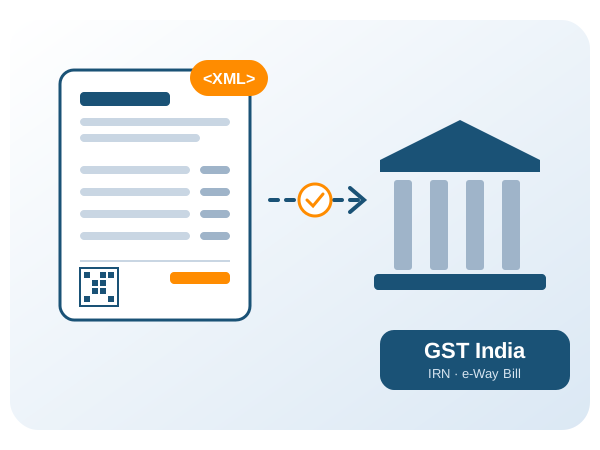
- E-invoicing
- AATO above Rs 5 crore
- IRN time limit
- 30 days (AATO Rs 10 cr+)
- E-way bill
- Goods above Rs 50,000
- ERPNext app
- India Compliance (open source)
What Does GST Compliance in ERPNext Cover?
GST compliance in India means charging the right GST on every invoice, reporting it to the government and claiming the right input tax credit. For most growing businesses that includes e-invoicing (registering each B2B invoice on the Invoice Registration Portal to get an IRN and signed QR code), e-way bills for moving goods, monthly returns (GSTR-1 and GSTR-3B) and reconciling purchase invoices with GSTR-2B.
In ERPNext all of this is handled by the India Compliance app (GPL-3.0, by Resilient Tech), which replaced the older built-in India features. It works on sales and purchase invoices, delivery notes and the Company, Customer, Supplier, Address and Item masters.
Which GST Rules Apply to Your Business?
E-invoicing has been extended step by step to smaller businesses; thresholds use aggregate annual turnover (AATO) of any financial year since 2017-18.
| Date | Who | What changes |
|---|---|---|
| 1 Jul 2017 | All registered businesses | GST introduced. |
| 1 Apr 2018 | Inter-state movement of goods | E-way bill required for consignments above Rs 50,000 (intra-state limits vary by state). |
| 1 Oct 2020 | AATO above Rs 500 crore | E-invoicing (IRN) starts for B2B invoices. |
| 1 Aug 2023 | AATO above Rs 5 crore | E-invoicing mandatory for B2B invoices, credit and debit notes and exports. |
| 1 Oct 2024 | All taxpayers | Invoice Management System (IMS): accept, reject or keep supplier invoices before GSTR-2B and GSTR-3B. |
| 1 Apr 2025 | AATO of Rs 10 crore or more | Invoices older than 30 days can no longer be reported to the IRP. |
Status as of 9 November 2026. Authorities change dates and thresholds; check the official sources before you plan.
What Do You Need for GST E-Invoicing and E-Way Bills?
- Correct GSTINs, state codes and addresses for your company, customers and suppliers.
- HSN or SAC codes on every item, with the number of digits your turnover requires.
- API access to the e-invoice (IRP) and e-way bill portals, set up once in ERPNext.
- A process to generate the IRN before the invoice reaches the buyer, and to cancel within the allowed window when needed.
- Monthly reconciliation of purchase invoices with GSTR-2B and action on supplier invoices in IMS.
E-Invoice vs E-Way Bill
| E-invoice (IRN) | E-way bill | |
|---|---|---|
| Purpose | Registers a B2B invoice with the government | Allows goods to move by road, rail, air or ship |
| Who | Businesses with AATO above Rs 5 crore | Anyone moving goods above Rs 50,000 (state limits vary) |
| Document | Sales invoice, credit and debit note | Invoice, delivery note, job work or stock transfer |
| Output | IRN and signed QR code on the invoice | E-way bill number, valid for a set distance and time |
| In ERPNext | Generated from the sales invoice | Generated from the invoice or delivery note; Part B updated later |
How Does ERPNext Handle GST, E-Invoicing and E-Way Bills?
With the India Compliance app, the whole GST cycle runs inside ERPNext, from the invoice to the return.
- GST setup: tax templates, place of supply, reverse charge, SEZ and export tax treatment, HSN/SAC on items.
- GSTIN validation against government APIs, with party name and address filled in from the GSTIN.
- E-invoice: IRN and signed QR code generated from the sales invoice, plus cancellation, for credit and debit notes too.
- E-way bill: generated from sales invoices and delivery notes, including job work and stock transfers; update vehicle (Part B), extend or cancel.
- GSTR-1 preparation with data checks, and Invoice Management System (IMS) actions for GSTR-3B.
- Purchase reconciliation with GSTR-2B and GSTR-2A to claim the full input tax credit, plus ITC reversal and ineligibility.
- TDS and TCS in ERPNext, and GST reports for tax liability and audit.
Government API features (e-invoice, e-way bill, GSTIN lookup, GSTR-2B download) need API credentials set up in the app. We set them up, test them on the sandbox and train your team.
How Do We Set Up GST Compliance in ERPNext?
- 1Gap checkWe review your GST registrations, invoice types, branches and current filing process, and list what must change.
- 2SetupInstall and configure India Compliance: GST settings, tax templates, API credentials for e-invoice and e-way bill, print formats with IRN and QR.
- 3Master dataGSTINs validated, addresses and state codes fixed, HSN/SAC codes added to items so every document passes the portal checks.
- 4TestGenerate e-invoices and e-way bills on the sandbox, run a trial GSTR-1 and a GSTR-2B reconciliation with your accountant.
- 5Go-live and supportSwitch to production, train sales, dispatch and accounts teams, and support month-end filing.
Why Work With FinByz
- Certified ERPNext and Frappe partner with 50+ in-house consultants and developers.
- 200+ projects for clients in 15+ countries since 2016.
- We set up, test and support the open-source compliance apps, and build the connectors that are missing.
- Monthly engagement: size the team to your deadline and scale down after go-live.