ERPNext Comparison with Odoo, SAP, Tally and Zoho
ERPNext is a free, open-source ERP from Frappe Technologies. Compared with Odoo, SAP Business One, Tally Prime and Zoho, it has no fee per user and keeps every module in one database. FinByz Tech, an ERPNext partner, puts the honest differences side by side, and says so when another ERP fits you better.
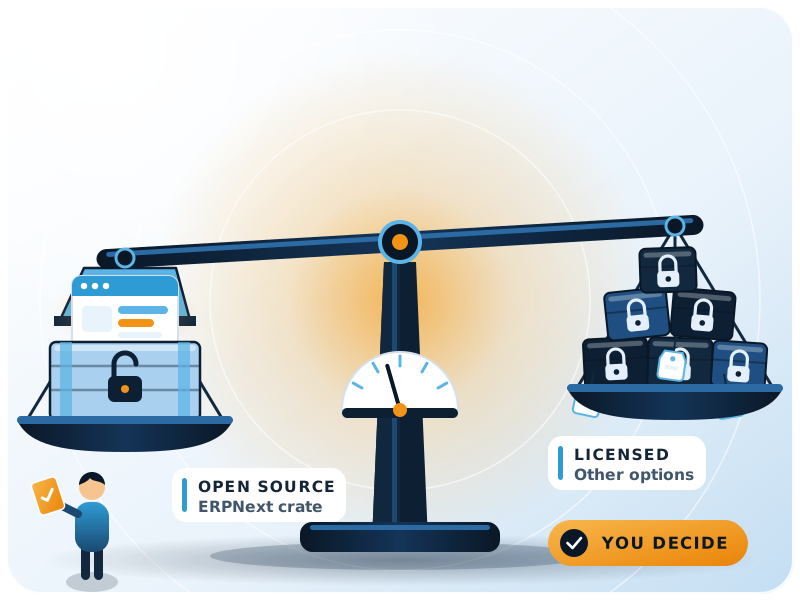
How does ERPNext compare with other ERPs?
ERPNext has no licence fee and one database for every module. Its rivals charge per user or per app.
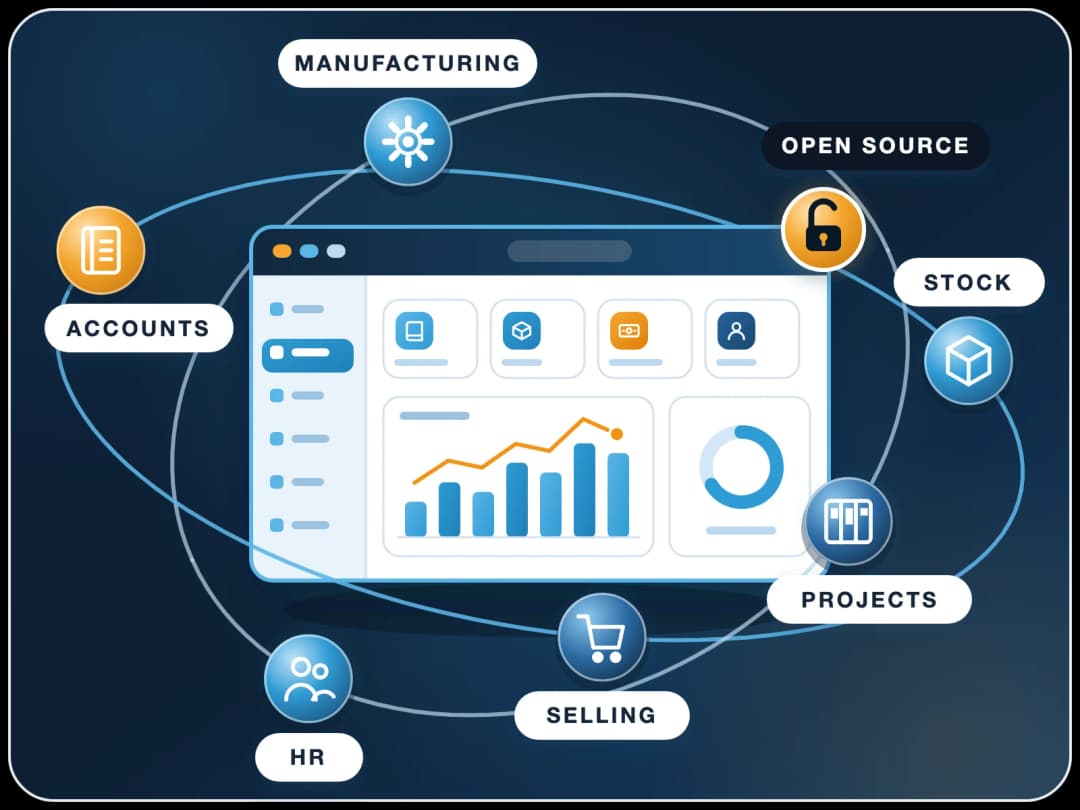
Odoo and Zoho charge a subscription for most business apps, SAP Business One charges per user, and Tally Prime covers accounting and simple stock. ERPNext covers accounts, stock, buying, selling, manufacturing, CRM, projects and HR, free under GPL v3. You pay for hosting and for the time to set it up.
The right choice depends on your size, your industry and what you already run. Below is a table, a fit guide and the places where ERPNext is weaker, so you can judge for yourself.
What is ERPNext, and who makes it?
ERPNext is an open-source ERP built on the Frappe Framework by Frappe Technologies, who own and maintain it. The code is public on GitHub under GPL v3. Read more about ERPNext.
Which companies use ERPNext?
Manufacturers, distributors, retailers, schools and service firms around the world. Frappe publishes customer stories on frappe.io, and our own are on the case studies page.
Which comparisons can you read?
Each one goes feature by feature, with costs, fit and how a move runs.
Odoo
Two open-source ERPs with different models: every ERPNext module is free, while Odoo keeps many apps in its paid edition.
Read the Odoo comparisonTally Prime
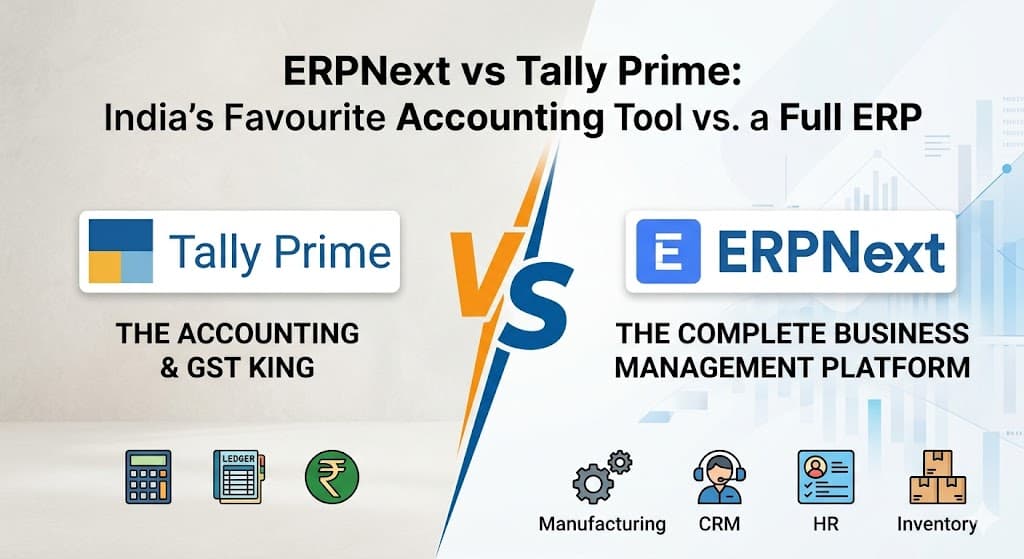
Accounting software against a full ERP: when GST books are enough, and when stock, production and CRM need one system.
Read the Tally comparisonZoho
One database against a suite of separate apps that sync with each other, compared module by module.
Read the Zoho comparisonSAP Business One
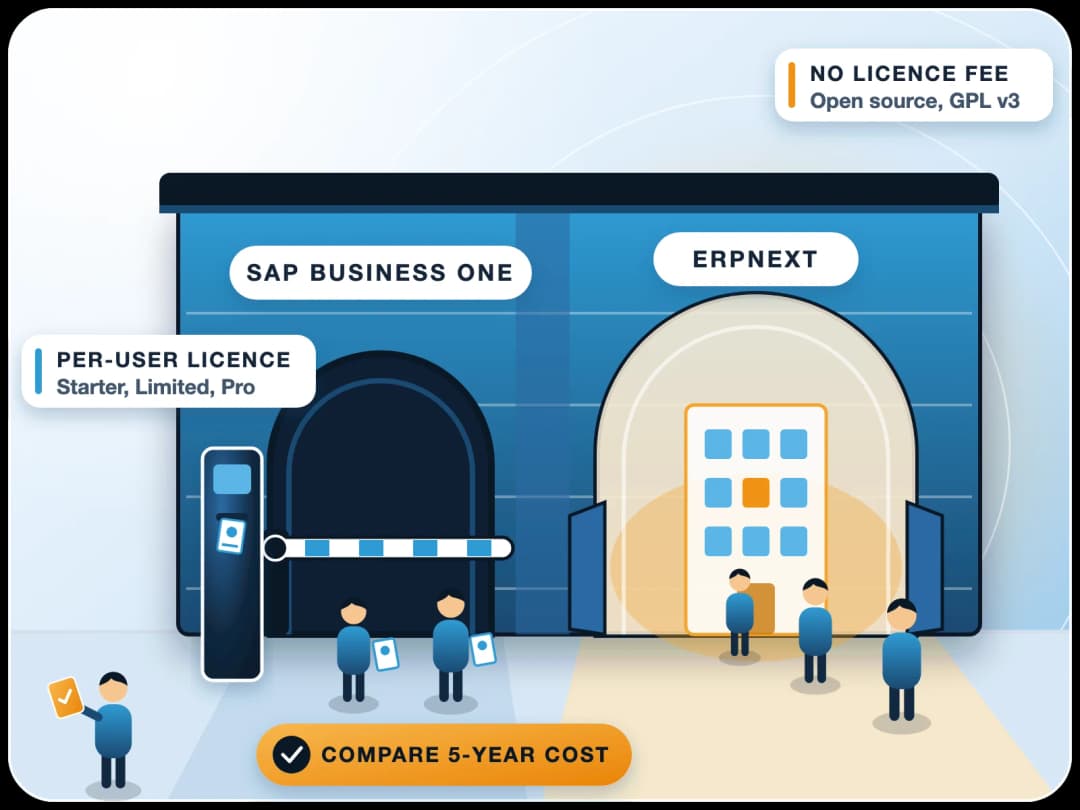
Per-user licences against no licence fee: features, five-year cost items and how a move runs.
Read the SAP comparisonSAP ECC After Support Ends
S/4HANA, extended maintenance or ERPNext: the dates and the options for companies still on ECC.
Read the guideOdoo Licence Cost Over Time
What the Enterprise edition's per-user fee adds up to as a team grows, set against an open-source ERP.
Read the cost guideHow do the main ERP options compare at a glance?
As of November 2026. Check each vendor's site for its current editions.
| ERPNext | Odoo | SAP Business One | Tally Prime | Zoho | |
|---|---|---|---|---|---|
| Licence | GPL v3, no fee | Free Community; paid Enterprise per user | Per-user licence | Licence per site | Subscription |
| Source code | Open | Open for Community only | Closed | Closed | Closed |
| Scope | Full ERP | Full ERP | Full ERP | Accounts, stock, GST | Separate apps |
| Manufacturing | Built in | Basic in Community; more in paid edition | Built in | Basic | Light |
| Customising | Forms, scripts, own apps | Studio or code | SDK and add-ons | TDL | Deluge scripts |
| Hosting | Frappe Cloud or your server | Odoo cloud or your server | Partner cloud or your server | Desktop or hosted | Zoho cloud |
Why compare with FinByz?
An in-house ERPNext team since 2016, with clients in 15+ countries.
We say when it does not fit
If Tally, Odoo or SAP suits you better, we tell you, and we explain why.
On ERPNext since 2016
We run our own company on ERPNext and have delivered 200+ projects.
Silver partner on frappe.io
Listed on frappe.io at PMM level 4.
Moves from other systems
We have moved companies off Tally, older ERPs and spreadsheets, with opening balances checked by our accountants.
Demo on your scenarios
You compare on your own orders, stock and invoices, not on a sales script.
No lock-in
ERPNext is GPL v3; anything we build is yours to keep and fork, with code access from day one.
Which ERP fits which kind of business?
A short guide from what we see in sales calls. The call is always yours.
When ERPNext fits
Growing manufacturers, traders and distributors with about 20 or more people in the system, who want accounts, stock, production and sales in one database with no fee per user.
When Odoo fits
Companies that want a large app store and a polished online shop, and accept a per-user subscription for the apps that sit in the paid edition.
When SAP Business One fits
Subsidiaries of groups that already run SAP and want the same vendor, with the budget for per-user licences and an SAP partner.
When Tally Prime fits
Small Indian businesses that need GST books and simple stock, with an accountant doing most of the work.
When Zoho fits
Small teams already on Zoho Mail or Zoho CRM that are happy with cloud-only apps and light manufacturing.
Where is ERPNext weaker than SAP or Odoo?
ERPNext has fewer ready-made add-ons and needs a good partner to set it up.
SAP and Odoo have larger partner networks and app stores. ERPNext covers the core well, but some industry needs, such as hotel front office, take extra work. FinByz Tech says so in the first call.
- Smaller app store. Fewer ready integrations than Odoo; some connectors are built per project.
- Fewer partners in some regions. Strong in India and the Gulf, thinner in parts of Europe and the Americas.
- Payroll by country. Frappe HR handles the structure; local payroll rules often need set-up or a payroll service.
- Set-up matters. It is flexible, so a poor set-up hurts. Standard first is the safe path.
How do costs compare over five years?
ERPNext has no licence fee, so its five-year cost is hosting, set-up, customising and support. Count every item for your own user numbers.
| Cost item | ERPNext | Licensed ERPs |
|---|---|---|
| Licence or subscription | None | Every user, every year or up front |
| Hosting | Frappe Cloud or your server, at cost | Vendor or partner cloud, often bundled |
| Set-up and training | Partner time | Partner time |
| Customising | Partner time, in your own apps | Partner time, often paid add-ons |
| Growth | No extra fee for new users | Fee rises with each user |
How hard is it to move to ERPNext from another system?
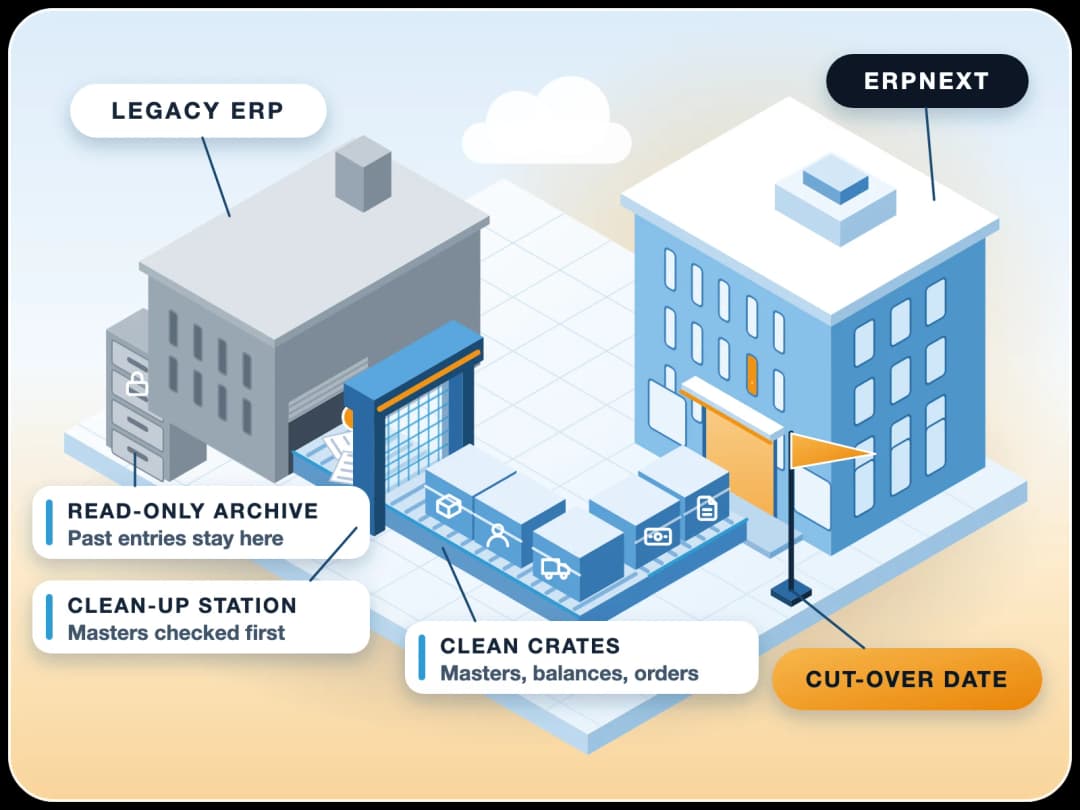
Most of the work is clean masters and opening balances; years of history stay in the old system. See our migration service for detail.
- 1Fit checkA consultant maps your processes to standard ERPNext and lists the real gaps, if any.
- 2MastersItems, customers, suppliers and the chart of accounts are cleaned in Excel and loaded first.
- 3Cut-over dateOpening balances, stock and open orders move after the old books close; years of history stay in the old system.
- 4Parallel checkA short parallel run, with our accountants reconciling the two systems.
- 5Module by moduleAccounts and stock go live first, then buying, selling, production and the rest.
What other ERPNext alternatives are worth a look?
Other names that come up when buyers shortlist. We have not written full comparisons for these yet.
| ERP | Type | Often chosen for |
|---|---|---|
| Oracle NetSuite | Cloud suite, subscription | Multi-entity groups that want one vendor's cloud |
| Microsoft Dynamics 365 Business Central | Cloud, per user | Companies standardised on Microsoft 365 |
| Acumatica | Cloud ERP | Distribution and construction in North America |
| Dolibarr | Open source | Very small firms that need simple ERP and CRM |
| Odoo Community | Open source | Teams that can live without the paid apps |
How should you run your own ERP comparison?
Test each ERP on your own scenarios and count every cost item for five years.
A demo of features tells you little. A demo of your own order, stock and invoice flow tells you a lot.
- Write down your three most important processes and ask each vendor to run them.
- Count licences, hosting, set-up and support for your user numbers over five years.
- Ask who checks your accounts and stock values before go-live.
- Speak to a client of the partner in your own industry.
- Ask what happens if you leave: data export, code access and licence terms.
Which ERP suits your business?
Tell us what you run today and what breaks. A FinByz Tech consultant shows ERPNext on your own scenarios, answers your questions on the other options, and says plainly if ERPNext is not the right fit.
- A short call about your processes and current software.
- A demo on your own scenarios.
- An honest view of the other options you are weighing.
- A proposal with monthly goals, if ERPNext fits.