ERPNext implementation · US, UK, EU & Gulf

ERPNext Implementation Partner

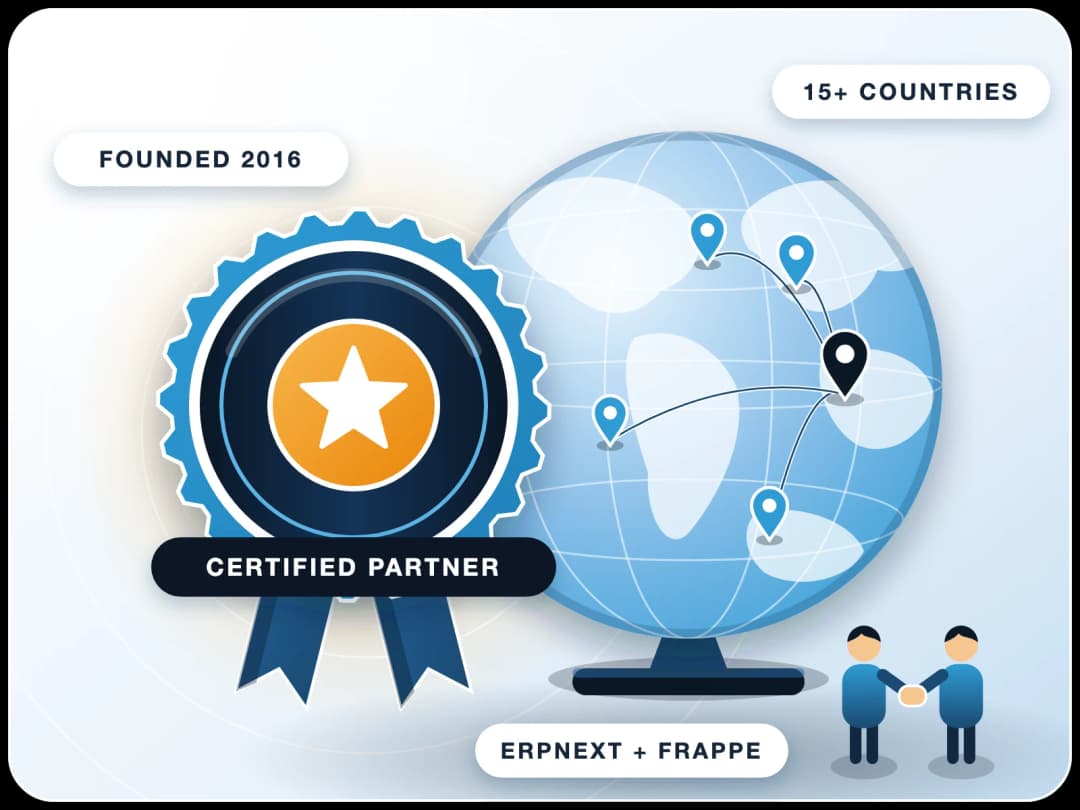
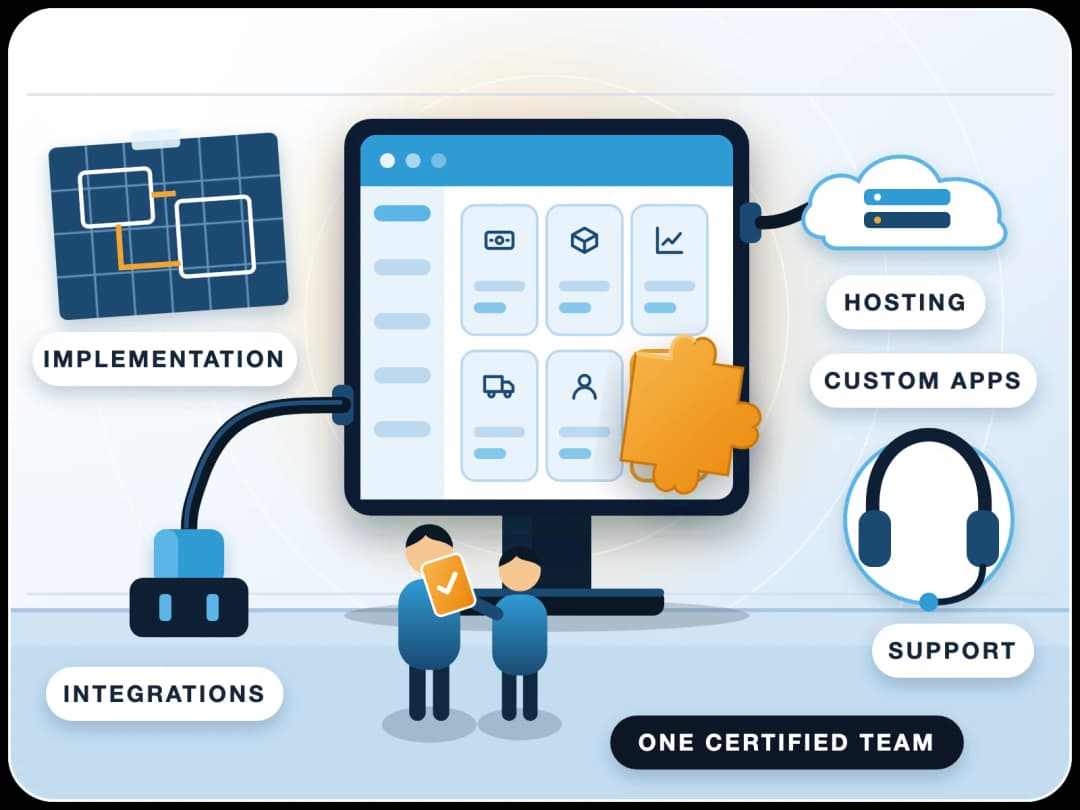
FinByz Tech is a certified ERPNext implementation partner. We take a company from the first workshop to go-live and stay on for support, with an implementation pod of consultants and developers on a monthly engagement: 200+ projects delivered in 15+ countries since 2016.

See How We Implement
Kickoff to go-liveData migrationTrainingSupport
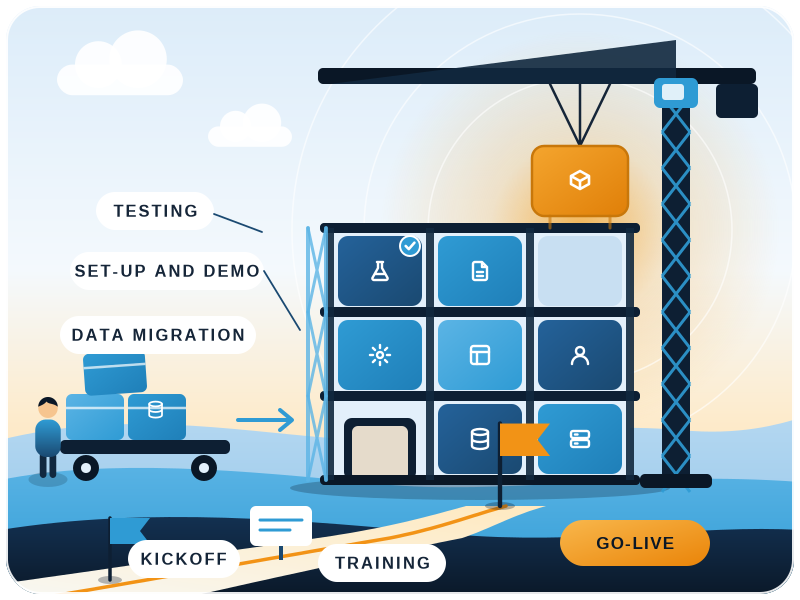
An ERPNext system being built like a building: a crane lowers the last module into place while data is moved in and the road runs from kickoff to go-live
2016
Founded
ERPNext work since 2016
200+
Projects
Delivered and supported
15+
Countries
Clients across the world
50+
In-house team
One team, no outsourcing
The short answer

What does an ERPNext implementation partner do?

An ERPNext implementation partner takes your company from decision to go-live on ERPNext.

An ERPNext implementation partner, such as FinByz Tech, a certified Frappe partner, studies how you work, configures ERPNext, migrates your data, builds custom apps where needed, tests everything, trains your users and supports them after go-live. You pay for the team's work, not for a licence.

Choose a certified ERPNext partner with its own consultants and developers. Then the people who set the system up also support it.

What sets FinByz Tech apart?

  • One team, start to finish. Planning, configuration, data, custom apps, training and support.
  • A proven method. The same ten steps on every project, with sign-off at each stage.
  • Standard first. We show what standard ERPNext covers before we build anything custom.
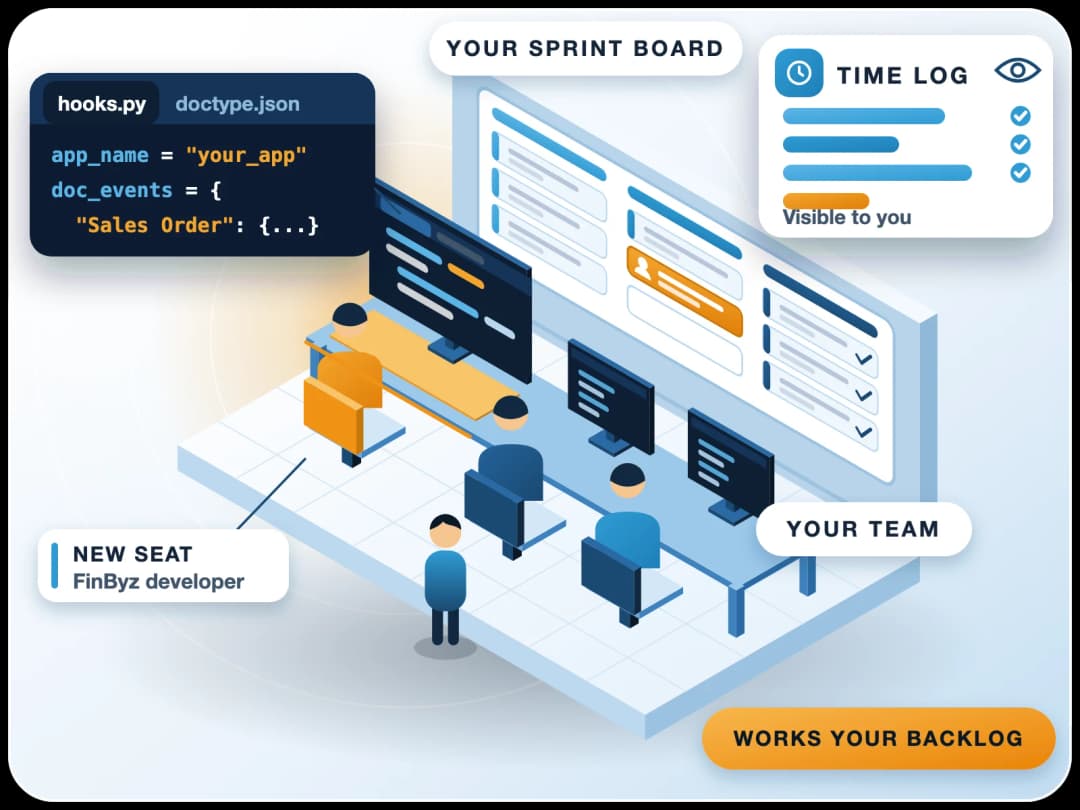
  • Time and material, made visible. A resource pod by the month, monthly goals, weekly milestones, and your own Productify access to see every hour.

When do you need an implementation partner?

ERPNext can be set up alone. These are the signs a partner will save you time and money.

  • You are moving off Tally, spreadsheets or an ERP at end of life, such as Microsoft Dynamics NAV.
  • You run several companies, branches or warehouses.
  • You manufacture, and need BOMs, work orders and costing.
  • You must issue e-invoices or file tax returns from the ERP.
  • You have no in-house ERP team to run the project.
  • A first ERPNext attempt stalled, or its accounts need cleaning up.
  • You need to merge several companies into one ERPNext set-up.

Buyer's guide

How do you choose an ERPNext implementation partner?

Choose a Frappe-listed partner with certified in-house staff, industry references, a written method, a data migration process, upgrade-safe custom apps and named support.

What should you look for?

  • Certified people. A partner listed by Frappe, with certified consultants and developers on staff.
  • Industry references. Live clients like you that you can call.
  • A written method. Phases, owners and sign-offs, not just a go-live date.
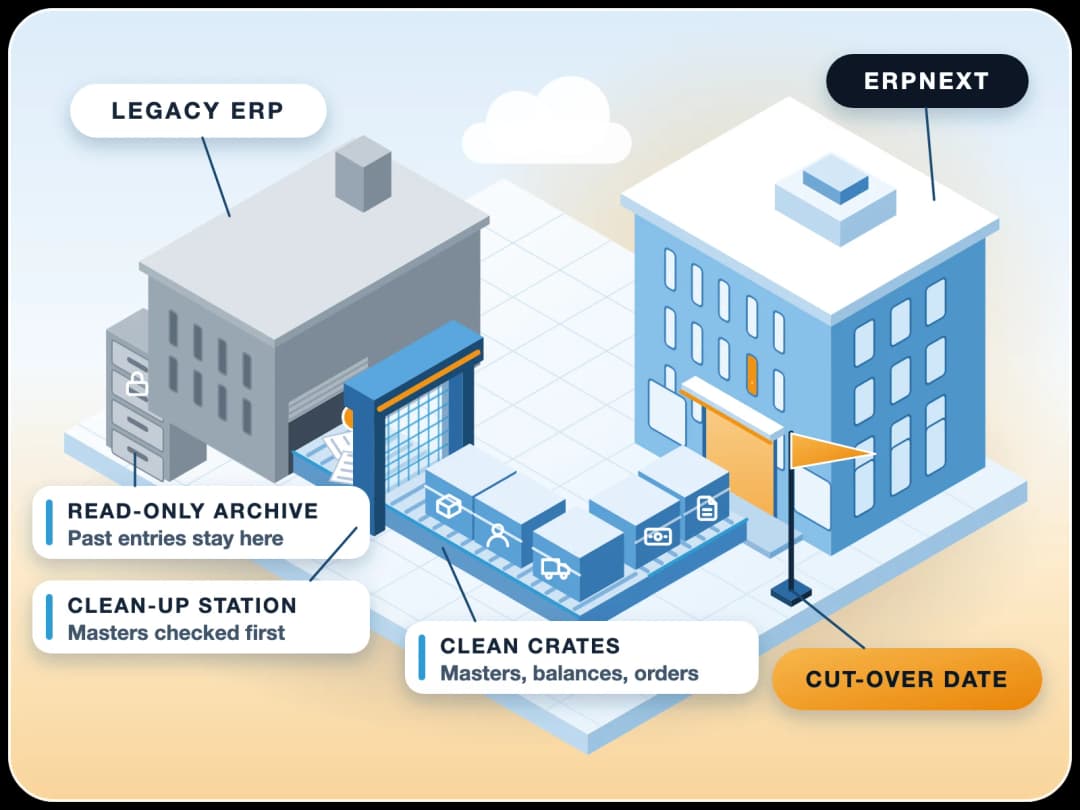
  • A data migration process. Mapping, cleansing, test loads and a checked cutover.
  • Upgrade-safe custom work. Custom code in separate apps, never in ERPNext's core.
  • Support after go-live. Named people, response times and an AMC option.

Which red flags matter?

  • A firm promise before discovery. A price and date given before anyone studied your processes is a guess.
  • Plans to edit ERPNext's core. Every future upgrade then breaks.
  • Vague on data migration. No clear answer on mapping and checks.
  • No training plan. The system goes live, but nobody uses it well.

Which implementation pod fits your project?

We work on time and material through a resource pod: a fixed block of hours each month, worked by a consultant and a developer, with architect, AI engineer and accountant access. Hours can go up or down by month.

FinByz ERPNext implementation pods
PodBest forTeam availabilityReviews
StarterFocused implementations and process improvementsScheduled allocation; monthly hours reservedMonthly
Growth (recommended)Full ERP implementation and a faster rolloutPriority allocation; monthly hours reservedMonthly
EnterpriseLarge ERP programmes and continuous changeA full-time dedicated team, no shared bandwidthWeekly

How is the work planned and tracked?

Time and material only works when you can see the time. This is how we keep it visible.

  • Monthly goals. At the start of each month we agree what the pod should deliver.
  • Weekly milestones. Progress is checked every week against those goals.
  • Productify access. You log in to our time and task app and see who worked on what, and for how long.
  • Daily activity report. An email at the end of each working day lists the tasks completed.

Need people inside your own team instead? See dedicated ERPNext developers.

Why us

Why choose FinByz Tech as your ERPNext implementation partner?

FinByz Tech has implemented ERPNext since 2016: 200+ projects in 15+ countries, a Silver Certified Frappe Partner (PMM level 4). We are an ERPNext implementation company based in Ahmedabad, and we also deliver ERPNext implementation in the UAE and across the US, UK and Europe.

ERPNext Implementation Experience

Implementing ERPNext since 2016 for manufacturers, traders, exporters and service companies.

Implemented Projects

200+ projects for companies in 15+ countries. They shaped the method we use today.

Support After Go-live

SLA-driven tickets and post-implementation support keep ERPNext running after go-live.

Support plans

Signing Off Procedures

A sign-off checklist confirms every requirement is met, and your team is ready, before closure.

ERPNext Documentation

Video tutorials and written guides on our YouTube channel and ERPNext wiki.

No Lock-in

ERPNext and our apps are open source under GPL v3. Code access from day one; fork it or change partner any time.

Open-Source ERPNext Expertise

Working with open-source technology since 2016. Custom apps kept outside ERPNext's core.

Certified by Frappe

Listed in Frappe's public partner directory, with Frappe School certified consultants on the team.

Our certification

Which client result can you check?

Our published case study, with the numbers before and after.

Case study: ERPNext 30x faster at SMOOR Chocolates

SMOOR Chocolates ran ERPNext v13, heavily customised by its previous partner. Saving a purchase order with 30-35 lines took about 15 minutes. After a one-month optimisation by FinByz, it takes under 30 seconds.

Read the case study

Can you speak to one of our clients first?

Yes. Before you sign, we arrange a short call with a current client in a business like yours, so you hear how we work from them.

How we implement

What are the steps in an ERPNext implementation?

Ten steps, in this order, on every ERPNext implementation we run.

Identify Objectives and Goals

We write down what must improve, such as a faster month-end or fewer stock errors.

Demonstration of ERPNext Product

A demo of ERPNext against your own requirements, before you commit.

Customer Onboarding and Service Agreement

A service agreement sets out responsibilities, deliverables and timelines.

System Set Up

ERPNext configured for your business, with all modules working together.

Data Migration

Your data moved in securely, with accuracy checked at each step.

Customise Where Needed

Custom fields, reports and apps where standard features stop.

Testing and Validation

Every module tested with real scenarios, including production flows.

User Training

Role-based training on the tested system, so each person knows their own screens and tasks.

Go Live

A short parallel run with the old system, then a clean cutover on a fixed date.

Support and Maintenance

Ongoing support and maintenance after go-live.

Before kickoff

How should you prepare for an ERPNext implementation?

Projects that start prepared go live faster. Three things to sort out early.

Who should be involved?

  • Up to two project in-charges who route all user questions.
  • A few core users from each team, trained first so they can train the rest.
  • Management time for the scope sign-off.

What should you decide early?

  • The go-live date, ideally the start of a month or year.
  • Document numbering and approval rules.
  • What stays in the old system for reference.

What data do you migrate to ERPNext?

Not all data needs to move. This is what we usually bring across, and how.

Data to migrate in an ERPNext implementation
DataWhat it includesTip
MastersItems, customers, suppliers, chart of accounts, employeesClean these first. Duplicates multiply after go-live.
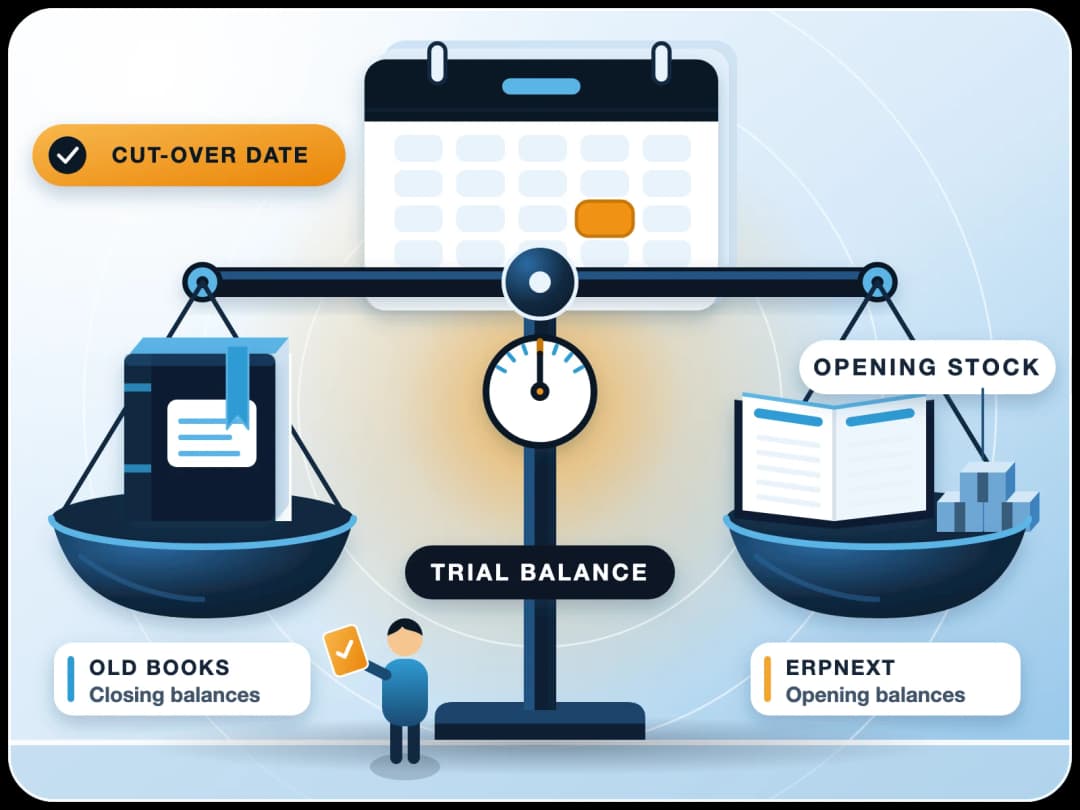
Opening balancesDebtors, creditors and item-wise stockImported once the migration date is fixed and the books are closed in the old system.
Open transactionsOpen sales and purchase orders, unpaid invoicesMove only what is still live.
HistoryOld invoices and entriesNot carried over. ERPNext goes live on clean opening balances; the old system stays for reference.
Shared work

What is your team's part in an ERPNext implementation?

An ERPNext implementation is shared work. The phases below group our ten steps.

ERPNext implementation phases: what FinByz does and what your team does
PhaseWhat FinByz doesWhat your team does
DiscoverWorkshops on your goals and processes; a demo against your requirementsUp to two project in-charges; the people who know each process
AgreeA proposal with the core module scope, the pod, the team and the termsAccept the plan; keep later changes to a minimum
BuildSet-up, custom apps where needed, data mapping and test loadsClean master data and opening balances; feedback on each build
ProveTesting of every module, then role-based trainingKey users test real scenarios and pass training
Go liveCutover, go-live support, then support and maintenanceStop using the old system; report issues through one channel

How does each module go live?

Modules go live one by one, in dependency order. Each one follows the same four steps.

  1. 1Demo and requirementsWe show the module using your own test entries and agree the changes you need.
  2. 2Configured first cutWe configure the agreed changes and present them, until you confirm.
  3. 3User training and sign-offEach user completes a few real entries, clears doubts and signs off the module.
  4. 4Go-live and priority supportThe module goes live with a week of priority support for your users.

What decides the cost and the timeline?

The number of modules and companies, custom work, integrations, data clean-up, the pod you choose, and how fast your team signs off each module.

Common pitfalls

What are the common ERPNext implementation challenges?

The six most common are user adoption, data import, integration, customisation, scalability and security. Here is how we handle each.

User Adoption

Getting people to use ERPNext well is harder than setting it up. We train each role on its own work.

Video training lets users learn at their own pace. Support stays close in the first weeks.

Data Importing

Legacy data is messy. We map your fields to ERPNext's import format and load in test rounds first.

A maker-checker review means a second person checks every import. Errors are caught before they go live.

Complex Integration

Linking ERPNext to IoT, SCADA or third-party software needs people who know both sides.

We use ERPNext's REST API and webhooks, or write custom connectors.

Customisation

Standard ERPNext covers most needs. The rest is customised with you, not for you.

Custom work goes into separate apps, so future upgrades stay safe.

Scalability

We design the set-up for growth, on industry-standard cloud infrastructure.

New companies, branches and users are added without re-implementation.

Security

Role-based access keeps sensitive modules for authorised users only.

Audit trails on every document, and regular backups, protect against mistakes and loss.

After go-live

How do you know an ERPNext implementation succeeded?

The first month-end closes in ERPNext, users log in daily, and no side spreadsheets remain. The full list:

  • The first month-end closes in ERPNext, not in spreadsheets.
  • Users log in every day without being chased.
  • Management trusts the reports enough to decide from them.
  • No parallel system or side spreadsheets remain.
  • Support requests fall week by week after go-live.
  • The next version upgrade installs without rework.
Industries

Which industries do we implement ERPNext for?

We set up ERPNext for each industry's own processes, from batch manufacturing to commodity trading, for clients in 15+ countries.

Where we work
  • USA flagUSA
  • UK flagUK
  • Canada flagCanada
  • UAE flagUAE
  • Saudi Arabia flagSaudi Arabia
  • Qatar flagQatar
  • Oman flagOman
  • India flagIndia
  • Germany flagGermany
  • Belgium flagBelgium
  • Switzerland flagSwitzerland
  • Norway flagNorway
  • Australia flagAustralia
  • Singapore flagSingapore
  • Malaysia flagMalaysia
  • Indonesia flagIndonesia
  • Bahamas flagBahamas
  • Mauritius flagMauritius
Client reviews

What do clients say about working with us?

Google review
“We've had an excellent experience working with this software service provider. Their innovative approach to solving complex technical challenges has significantly improved our product. The addition of a dedicated developer to our team ensured seamless communication and consistent progress.”
Deep PatelCEO & Founder, Millennium Vitrified Tiles Pvt. Ltd., India
Read on Google
Google review
“I personally think they go far and beyond in their delivery and commitments. As well as insuring that their clients are happy and well informed with there needs.”
Ali Saleh Al-EbrahimCTO, Construction Pillars Company, Saudi Arabia
Read on Google
Google review
“Great and professional software solutions, with a team very focused on client satisfaction.”
Chief Executive OfficerCooperativa de Trabajo Apicola Pampero, Argentina
Read on Google
Ready when you are
Start your ERPNext implementation with FinByz Tech.
Ready to Transform Your Business?

Start Your ERPNext Implementation Journey with FinByz Tech

Contact us today to discuss your requirements and discover how our ERPNext experts can help you achieve operational excellence.

Trusted by clients in 15+ countries since 2016
Questions buyers ask

Frequently Asked Questions

Find answers to common questions about our services