ERPNext Implementation Service
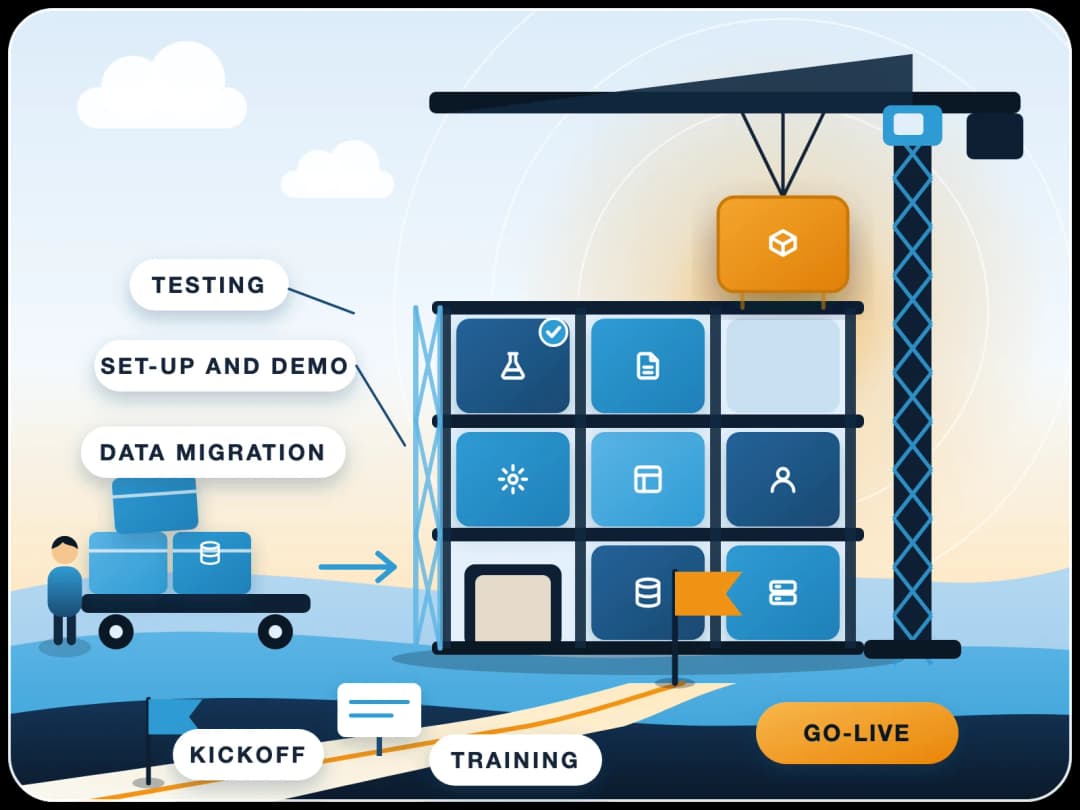
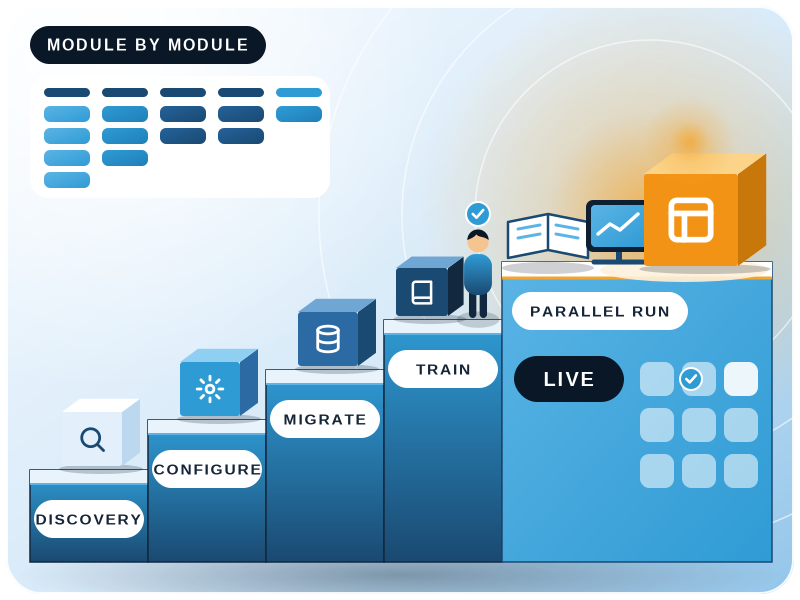
FinByz Tech's ERPNext implementation service takes a company from discovery to go-live in phases, module by module: clean data, a short parallel run, user training with sign-off, then hypercare. 200+ projects in 15+ countries since 2016, by a Silver Certified Frappe Partner.
What do ERPNext implementation services include?
ERPNext implementation services take a company from decision to daily use of ERPNext.
They cover the process study, configuration, data migration, custom work where needed, testing, user training, go-live and hypercare. FinByz Tech runs them in phases, module by module, so the business keeps running while ERPNext takes over.
ERPNext is open source, so you pay for the implementation work, not for licences.
Implementation decides whether people use the system, whether the books are right, and whether ERPNext can be upgraded later. FinByz Tech has implemented ERPNext for manufacturers, traders, exporters and service companies since 2016.
This page explains how we implement. To compare partners first, see how to choose an ERPNext implementation partner.
What is included in the service?
One team handles every part, from the first workshop to support after go-live.
- Process study. How orders, stock, production and month-end run today.
- Module scope. The core modules and the order they go live in.
- Configuration. Settings, workflows, approvals, roles and print formats.
- Data migration. Clean masters, opening balances and pending orders.
- Custom work where needed. Only for real gaps, built as separate apps.
- Training and sign-off. Each user trained on their own work, module by module.
- Go-live and hypercare. Close support while the first real transactions run.
- Updates after go-live. Minor releases applied, a major upgrade each year under contract.
When is ERPNext not the right fit?
We would rather tell you now than sell a project that fails.
- Accounts stay elsewhere. If accounts remain in Tally, ERPNext loses much of its core value.
- Very few users. ERPNext fits best where many people work in one system with set processes.
- A very small budget. A support pack plus self-implementation may serve you better than a full project.
- Complex group consolidation. Large multi-country groups should check the fit against SAP or Oracle first.
What is the ERPNext implementation process?
FinByz Tech's ERPNext implementation process has six phases: discovery and analysis, module scope and plan, configuration, data migration, training and go-live, then hypercare. Phases two to five repeat for each module.
- 1Discovery and analysisWe study your business processes, documents and pain points, and agree what success looks like.
- 2Module scope and planCore modules and the go-live order, set by dependency: purchase, stock and sales before manufacturing.
- 3Configuration and set-upCompany, chart of accounts, settings, workflows and roles, shown to you with your own test entries.
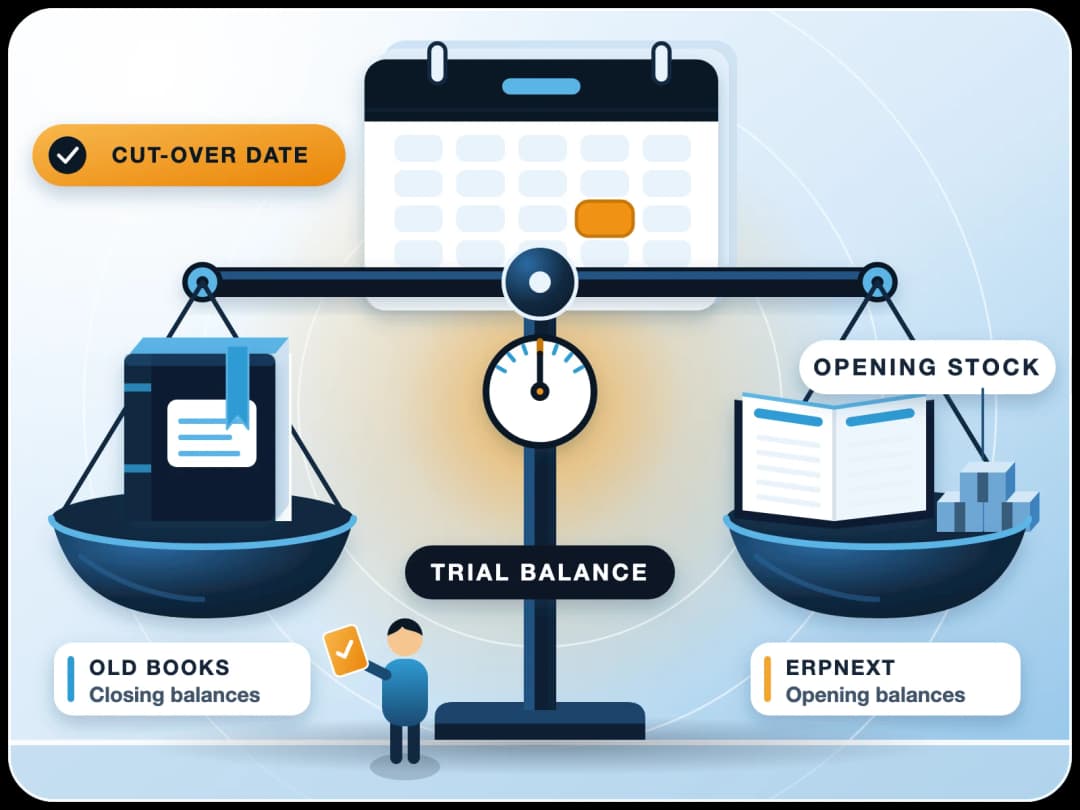
- 4Data migrationMasters imported from clean templates; opening balances and pending orders on a fixed cut-over date.
- 5Training and go-liveUsers train on the configured system and sign off. Each module goes live with priority support.
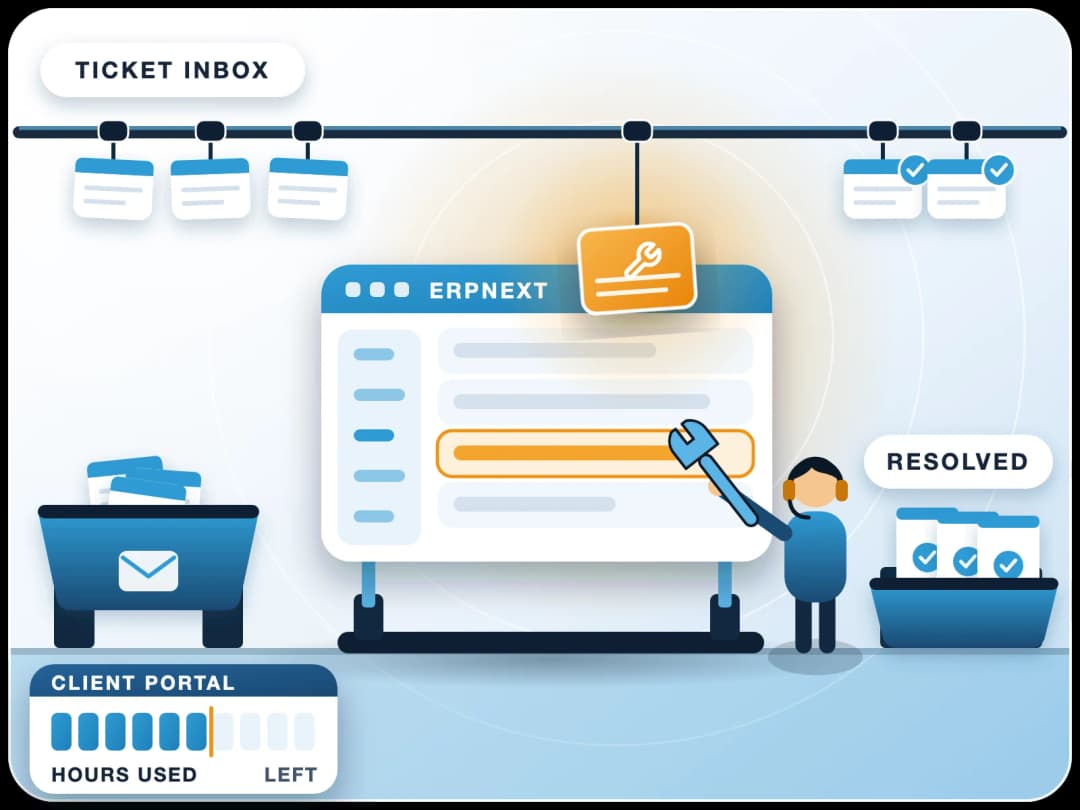
- 6Hypercare and supportAn intensive period after go-live to clear early friction, then ongoing support and upgrades.
Planning your own rollout? Read our guides to ERP implementation steps and the ERP go-live plan.
What is a realistic ERPNext implementation timeline?
A typical ERPNext implementation timeline is three to five months for a mid-size manufacturer.
A narrow scope, such as accounts and stock for one company, can go live in one to two months. Each module usually takes about a week of set-up, demo and training once the data is ready. User training is often the longest phase.
These are typical ranges, not promises. The plan is set month by month: we agree what each month should achieve and track it with weekly milestones, so you see progress long before the last module goes live.
What decides the timeline?
Modules and companies, custom work, integrations, data quality, your team's time, and users and sites decide most of the timeline.
Modules and companies
Each module and each company adds set-up and training. Most projects start with the core and add the rest in phases.
Custom work
Standard features are fastest. Every custom report, workflow or app adds build and testing time.
Integrations
Links to e-commerce, banks, tax portals or machines each need their own testing.
Data quality
Clean masters move quickly. Duplicates and messy opening balances are the most common delay.
Your team's time
Decisions, test entries and sign-offs come from your side. A project champion with time keeps it moving.
Users and sites
More users and locations mean more training sessions, and training is often the longest phase.
What slows a project down?
The same four things slow most projects down.
- Requirements added after the scope is agreed.
- Copying old-system habits instead of using ERPNext's standard flow.
- No one on your side with time to decide and test.
- Migrating years of history instead of clean opening balances.
Which ERPNext implementation methodology do we use?
FinByz Tech uses an agile, demo-first ERPNext implementation methodology in short cycles, close to the rapid implementation approach Frappe recommends.
Demo first, not waterfall
Instead of months of requirement documents, users see ERPNext with their own data early, and we refine from their feedback.
Standard first
We map your needs to standard ERPNext and customise only the real showstoppers. That keeps cost down and upgrades safe.
A working flow before the full picture
The minimum flow that runs the business goes live first. Accounts, manufacturing and the rest follow in phases.
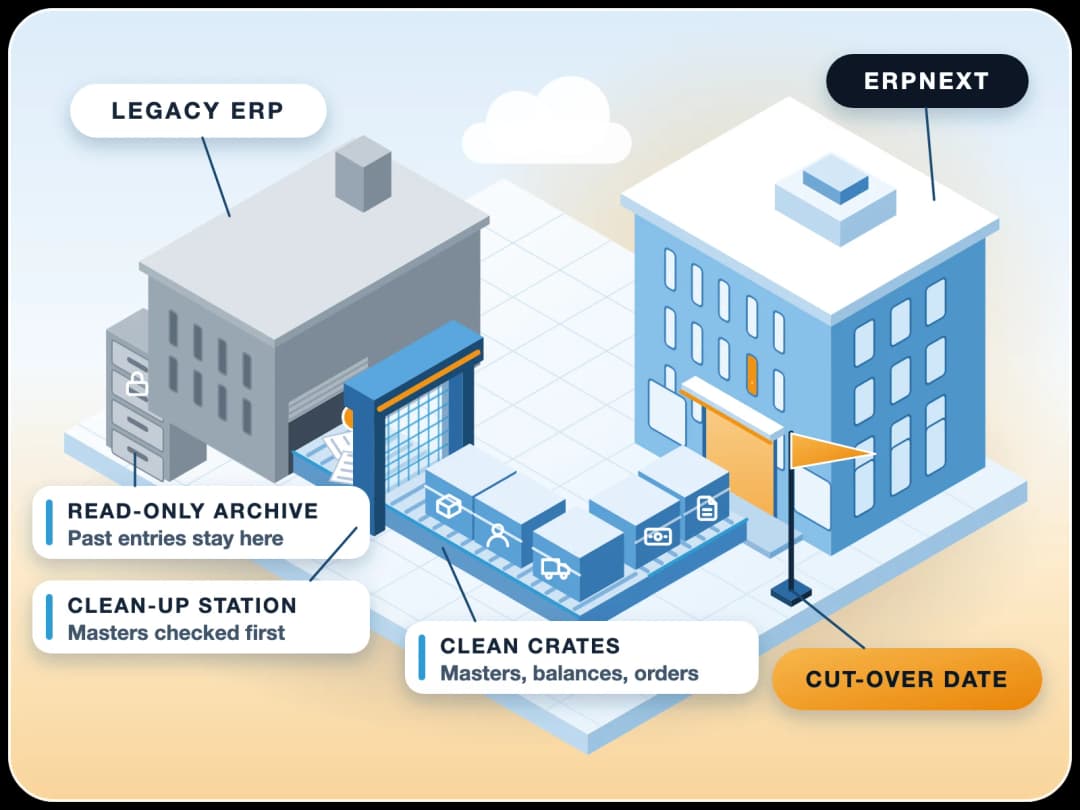
A clean cut-over
No legacy transactions are carried over. ERPNext starts from clean opening balances, with a short parallel run.
AI once the data is reliable
AI agents are added alongside each module once its data is clean, not as a separate phase at the end.
Frappe's own view: the new paradigm of rapid ERP implementation.
How does each module go live in the ERPNext implementation process?
Every module follows the same four steps, with a clear part for us and for your team.
| Step | What FinByz does | What your team does |
|---|---|---|
| 1. Demo and requirements | Shows the module with your test entries; agrees the changes | Brings the right people; enters test data |
| 2. Configured first cut | Configures the agreed changes and presents them until confirmed | Checks the flow against real cases |
| 3. User training and sign-off | Trains each role on its own screens | Each user completes real entries and signs off |
| 4. Go-live and priority support | Stays close for the first week of daily use | Stops using the old process for that module |
How is data migration handled?
Clean data is the base of a clean system, so migration starts early and ends with a checked cut-over.
We move what you need to run the business: masters, opening balances and pending orders. Years of old transactions stay in the old system for reference, which keeps ERPNext clean and the cut-over short.
Moving from Tally, SAP or another ERP? See ERP migration to ERPNext and opening balance reconciliation.
- Templates. Masters such as items, customers and suppliers are prepared in standard Excel templates.
- Clean-up first. Duplicates and wrong codes are fixed before import, not after.
- Maker-checker. A second person checks every import before it goes live.
- Test loads. Data is loaded into a test site first and checked against reports.
- Opening balances. Debtors, creditors and stock come in once the old books are closed.
- Parallel run. The old system runs alongside for a short period while our accountants reconcile.
What results should ERPNext implementation services deliver?
The outcomes we plan for, beyond setting up software.
Daily Work Keeps Running
Implementations planned to keep daily sales, purchase and dispatch running throughout the transition.
Live Early
A working flow goes live early, so the business uses ERPNext while the rest is added.
Room to Grow
A foundation that takes new companies, branches and users without re-implementing.
Continuous Optimisation
We stay after go-live: support, upgrades and the next round of improvements.
Numbers People Own
Dashboards for the numbers each manager is measured on, live from ERPNext.
AI That Does Real Work
Supplier invoices read into entries and inquiries sorted into leads, inside ERPNext.
ERPNext + AIWhat do clients say about working with us?
“We've had an excellent experience working with this software service provider. Their innovative approach to solving complex technical challenges has significantly improved our product. The addition of a dedicated developer to our team ensured seamless communication and consistent progress.”
“I personally think they go far and beyond in their delivery and commitments. As well as insuring that their clients are happy and well informed with there needs.”
“Great and professional software solutions, with a team very focused on client satisfaction.”
Which client result can you check?
Our published case study, with the numbers before and after.
Case study: ERPNext 30x faster at SMOOR Chocolates
SMOOR Chocolates ran ERPNext v13, heavily customised by its previous partner. Saving a purchase order with 30-35 lines took about 15 minutes. After a one-month optimisation by FinByz, it takes under 30 seconds.
What happens after you contact us?
A consultant sets up a free discovery call. We show you standard ERPNext, map your processes to it, and send a proposal with the module scope and engagement options. Before you sign, you can speak to a current client.
Compare us with other partners on our certified ERPNext partner page, see everything we run as an ERPNext service provider, or read about ERPNext support after go-live.
How are ERPNext implementation services billed?
On time and material, through a monthly resource pod. There is no licence fee, you see every hour in Productify, the plan changes from next month, and the code is open source under GPL v3, so there is no lock-in.
Ahmedabad, India
Head office and delivery centre. FinByz Tech Pvt Ltd, 504-Addor Ambition, Nr. Navrang Circle, Navrangpura, Ahmedabad, Gujarat 380009.
Dubai, UAE
UAE office. Finbyz Tech FZE, DWTC free zone, Dubai.