ERPNext Process Consulting Services
FinByz Tech's ERPNext consulting services map how your business runs today, fit it to standard ERPNext, and decide what to configure, customise or change before anything is built. For new ERPNext projects and for live systems that are not working as they should.
What are ERPNext consulting services?
ERPNext consulting services turn how a business works into a clear plan for ERPNext.
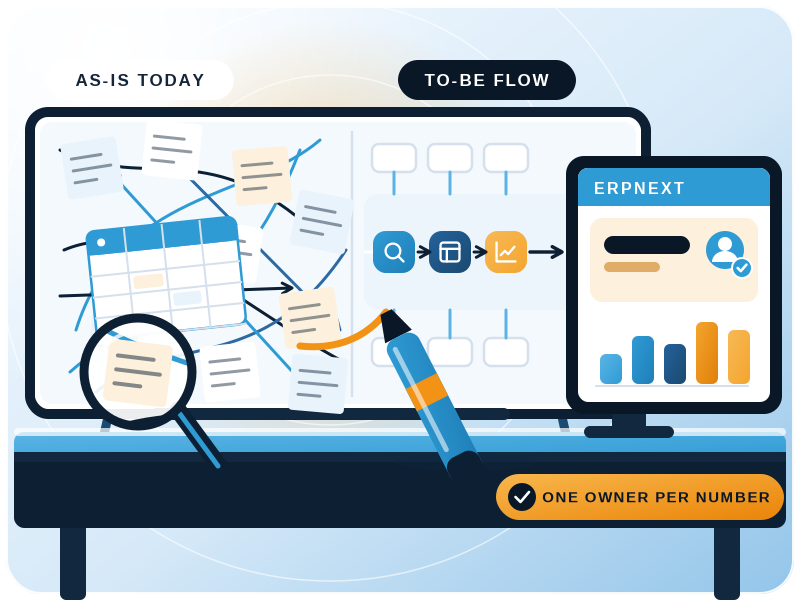
FinByz Tech maps your current processes, shows them in standard ERPNext, and marks each gap as configure, customise or change the process. You get process maps, a fit-gap list, the numbers each manager will own, and a phased plan.
An ERP set up around unclear processes fails. So we map the work first: how tasks are done, how information flows and where decisions are made. Then we decide what ERPNext should do.
We map to standard ERPNext first and customise only real showstoppers. That keeps the system simpler, cheaper to run and easier to upgrade.
What do you receive from process consulting?
Six things, all in plain language, that you keep whoever builds the system.
- As-is process maps. How orders, purchases, production and accounts really run today.
- To-be flows on standard ERPNext. The same processes, shown in ERPNext with your own sample data.
- A fit-gap list. Each need marked: standard, configure, customise, or change the process.
- Numbers and owners. The few figures each manager will own, and where each one comes from.
- A phased plan. Modules in order, with monthly goals and what has to be ready first.
- Open risks. Data, people and decisions that could hold the project up.
How is process consulting different from implementation?
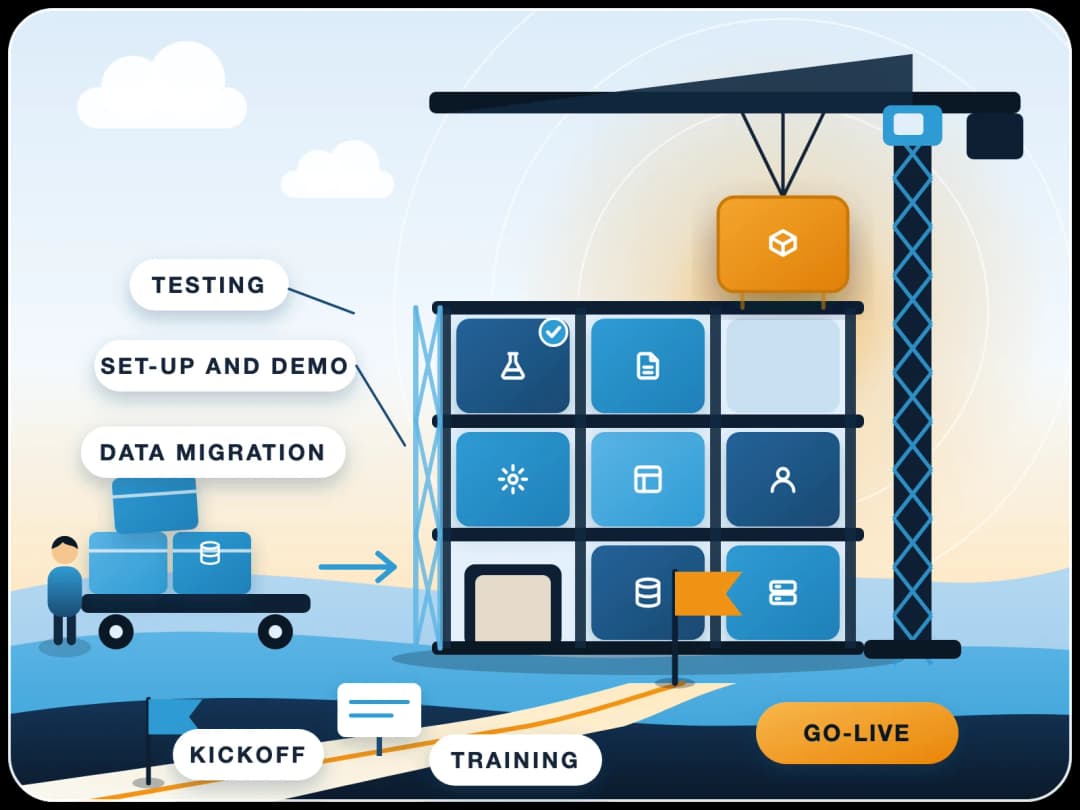
Consulting decides what ERPNext should do and in which order. Implementation sets it up, moves the data, trains users and goes live.
Is ERPNext right for your business?
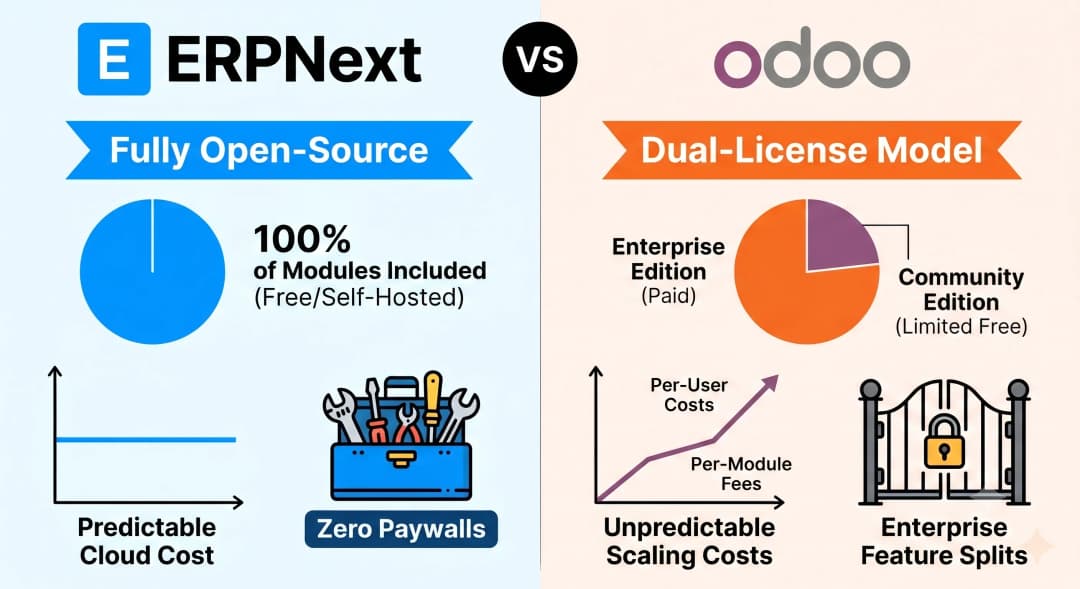
Consulting answers that honestly. ERPNext is strong in accounts, stock and manufacturing, with no licence fee. Where a process is a poor fit, we say so before you spend on it.
When do you need ERPNext process consulting?
Before an ERPNext project starts, when a project has stalled, or when a live system no longer fits how the business works.
What does an ERPNext process consulting engagement look like?
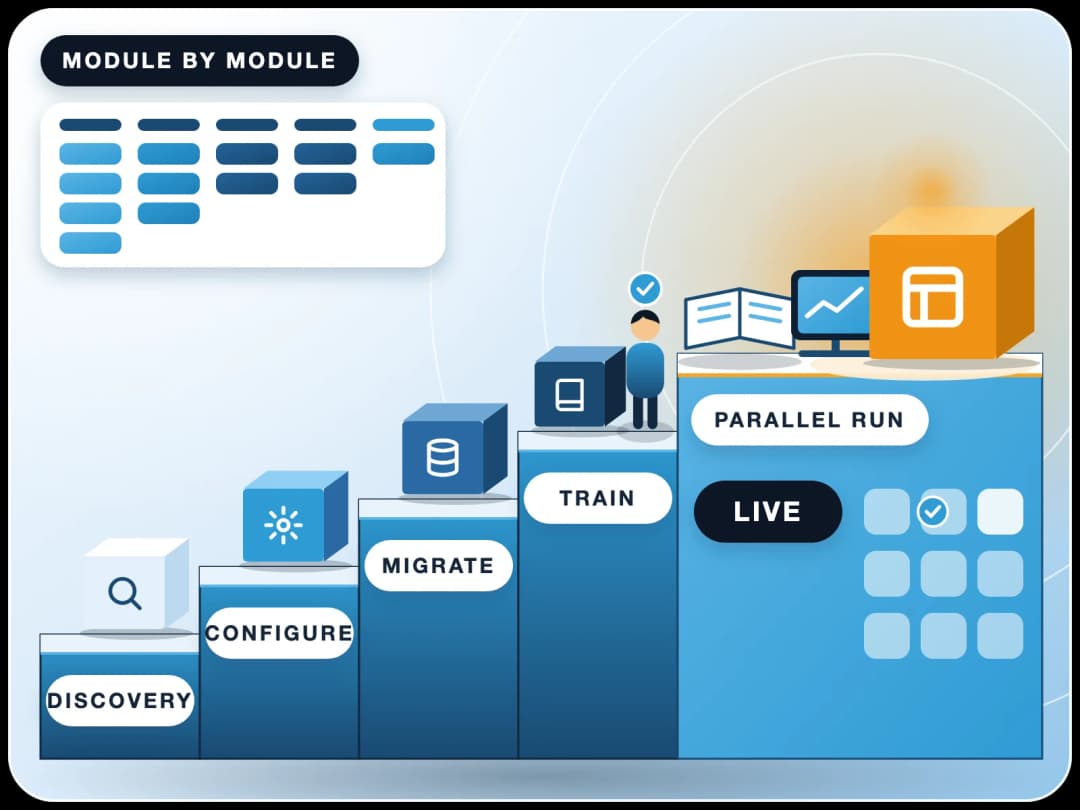
Six steps, run as short workshops over a few weeks. The pace depends on how many departments and sites are in scope.
- 1Discovery workshopsShort sessions with each department head. We ask how work really flows, not how the manual says it does.
- 2As-is mappingEvery hand-off, spreadsheet and approval drawn out, with the delays and double entry marked.
- 3Demo on standard ERPNextWe show your own processes in standard ERPNext early, so you judge the software, not a slide.
- 4To-be designSimpler flows agreed with the people who will use them, using standard ERPNext flows.
- 5Fit-gap decisionsFor each gap: configure, customise, or change the process. Only real showstoppers get custom code.
- 6Phased roadmapModules in a sensible order, monthly goals, and the numbers each phase should move.
How does ERPNext process mapping decide what to configure, customise or change?
A fit-gap analysis compares each business need with standard ERPNext and marks it: use standard, configure, change the process, or customise. The cheapest answer that works wins.
| Decision | When it fits | Example |
|---|---|---|
| Use standard | ERPNext already does it, maybe differently from the old system | Standard sales order to delivery note to invoice |
| Configure | Settings, workflows, roles or a custom field cover it | A two-level approval on purchase orders above a limit |
| Change the process | The old way exists only because the old system forced it | Stop re-keying orders from email into a spreadsheet |
| Customise | A true showstopper that standard and configuration cannot meet | Industry costing or a document a regulator requires |
Customisations live in a separate custom app so ERPNext can still be upgraded. See custom ERPNext development for how we build them.
Why does process consulting matter before ERPNext goes live?
Because most ERP problems are process problems that were never decided.
Fewer customisations
Most gaps close with configuration or a small process change. Less custom code means cheaper upgrades.
No copying the old system
Old workarounds are left behind instead of being rebuilt in ERPNext.
Users agree before the build
People see their own processes in ERPNext early, so go-live is not a surprise.
Clear numbers from day one
Each report has an owner and an entry point before the build starts.
Documents you keep
Process maps, fit-gap list and plan are yours, whoever builds the system.
A plan you can budget
Monthly goals in a sensible order, instead of one large unknown total.
Which business processes do we map?
The core cycles every company runs. Most projects start with accounts and stock, because that is what an ERP is for.
Order to Cash
Lead, quotation, sales order, delivery, invoice and collection, with credit limits and ageing.
Procure to Pay
Request, RFQ, purchase order, receipt, quality check, landed cost and supplier payment.
Plan to Produce
BOMs, production plans, job cards, job work and costing that matches what the floor does.
ERPNext for manufacturingStock and Warehouses
Batches, serial numbers, reorder levels, transfers and stock counts across locations.
Record to Report
Chart of accounts, tax set-up, bank reconciliation, cost centres and month-end close.
Hire to Pay
Attendance, leave, payroll and statutory forms, linked to the accounts.
HR and payrollHow do numbers and dashboards come out of process consulting?
Which numbers does each manager own?
FinByz Tech asks that question in every ERPNext consulting workshop. Each number gets an owner, an entry point in ERPNext and a dashboard. When the owner is reviewed, you look at those numbers.
Companies that grow after ERPNext decide what to delegate, attach a number to it and give someone that number to own. Order-to-dispatch time, stock days, overdue receivables, production yield: each one needs clean data entered at the right step.
That is why the dashboard is designed with the process, not after go-live. The data entry points come from the to-be flow, and the report follows.
Can you consult on a live ERPNext system that is not working?
Yes. A system that people avoid is usually a process gap, not a software fault. These are the signs we see most.
People work outside ERPNext
Spreadsheets run beside the system because the process in ERPNext does not match the work. We map the gap and fix the flow.
Too much custom code
A previous build copied the old system. We find what standard ERPNext can do instead and plan the clean-up.
Reports nobody trusts
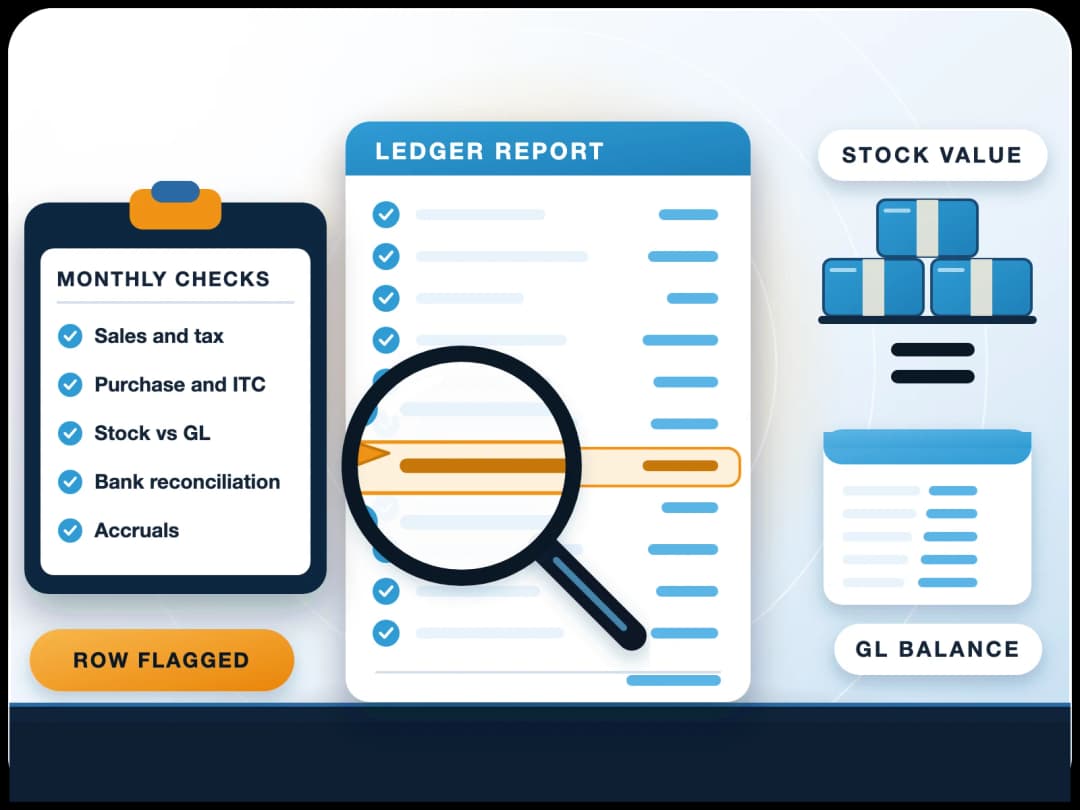
Wrong entries at the source give wrong numbers. An ERPNext transaction audit shows where the books went wrong.
Slow screens and month-ends
Often a process problem, sometimes code. See our performance work.
What can a review of a live system find?
Workarounds, needless custom code and slow steps that standard ERPNext already handles. In the case below, removing them made the system 30 times faster.
Case study: ERPNext 30x faster at SMOOR Chocolates
SMOOR Chocolates ran ERPNext v13, heavily customised by its previous partner. Saving a purchase order with 30-35 lines took about 15 minutes. After a one-month optimisation by FinByz, it takes under 30 seconds.
Who from your team needs to be involved?
Consulting works only with your people in the room. This is what we ask for.
- A project champion who can decide when departments disagree.
- One coordinator who books sessions and chases answers.
- Process owners from sales, purchase, stores, production and accounts, a few hours each.
- Sample documents: a quotation, an order, an invoice, a stock report, a costing sheet.
- A goals note: the three outcomes that would make the project a success for you.
Where do AI and automation fit in ERPNext business process consulting?
When should AI be added to ERPNext?
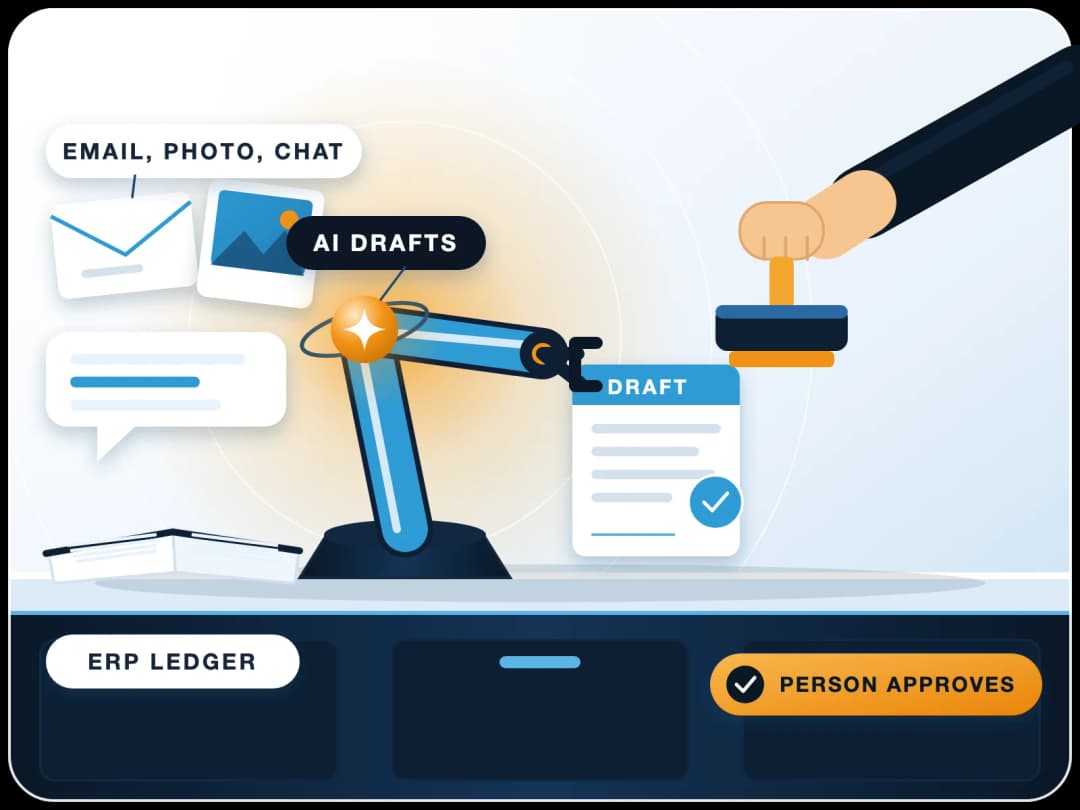
After clean data. FinByz Tech plans AI alongside each module once its data is reliable, not as a separate phase at the end. Every agent works inside ERPNext with the user's own permissions, and a person approves what it does.
Process mapping shows where people still type, sort or chase by hand: supplier invoices matched to orders, delivery notes photographed at the gate, inquiry emails turned into leads. Those are the first places for automation.
See ERPNext + AI for what runs inside ERPNext today.
Which industries' processes do we know?
We have mapped processes for manufacturers, traders, exporters and logistics firms, from batch chemicals to job-work engineering.
How are ERPNext consulting services billed?
On time and material, like the rest of our work: you pay for the hours spent, with every hour visible to you.
What decides the hours for ERPNext consulting?
The number of departments, sites and companies to map. FinByz Tech proposes the hours after a first call. Still comparing systems? See ERP selection help.
- A monthly plan of hours. Consulting can be its own short plan or the first month of a project.
- Every hour visible. Your own access to Productify: tasks, time logs and notes.
- One month at a time. Change the plan from next month, or stop with 30 days' notice.
- No price list. Hours depend on departments, sites and companies, so we propose after a first call.
Do you keep the documents if you implement elsewhere?
Yes. The process maps, fit-gap list and plan are yours. You can implement with FinByz, another partner or your own team.
What do clients say about working with FinByz?
“We've had an excellent experience working with this software service provider. Their innovative approach to solving complex technical challenges has significantly improved our product. The addition of a dedicated developer to our team ensured seamless communication and consistent progress.”
“I personally think they go far and beyond in their delivery and commitments. As well as insuring that their clients are happy and well informed with there needs.”
“Great and professional software solutions, with a team very focused on client satisfaction.”
What happens after you contact us?
A consultant calls to understand your business and the three outcomes you care about. We agree which departments to map first, then send a short proposal for the consulting work. FinByz Tech has worked on 200+ projects in 15+ countries.
Want to know what a consultant does day to day? Read what ERPNext consultants do, or see all ERPNext services.
Ahmedabad, India
Head office and delivery centre. FinByz Tech Pvt Ltd, 504-Addor Ambition, Nr. Navrang Circle, Navrangpura, Ahmedabad, Gujarat 380009.
Dubai, UAE
UAE office. Finbyz Tech FZE, DWTC free zone, Dubai.